

### Blog Post:
Desk Footrest selection is not just about comfort—recent research shows it can measurably improve posture and leg circulation at your desk, if you pick, size, and use it correctly. This evidence-driven guide translates the latest ergonomic science and buying insights into simple, practical steps so you can choose an under-desk footstool or adjustable foot platform that actually benefits your body—not just your office aesthetic.
Key Takeaways
- dynamic footrests that promote movement support better leg circulation and encourage improved, supported posture compared to static, decorative units.
- Fit matters: Always check height, angle, width, and adjustability based on your chair, body size, and shared workstation needs—generic “one-size-fits-all” claims can backfire.
- Most negative reviews cite poor durability, bad adjustability, and “no difference” in comfort—screen for these red flags before buying, and look for footrests with verifiable specs and user-tested designs.
- Why a desk footrest matters — posture and circulation in plain terms
- How to choose, size, and set up your desk footrest (step-by-step)
- Advanced analysis & common pitfalls (and how to avoid them)
- Conclusion: What works (and how to buy smart)
- FAQ: Desk Footrest — what most people get wrong
Why a desk footrest matters — posture and circulation in plain terms
Most people buy a desk footrest for comfort, but the real research-backed benefits go deeper. Studies show two main advantages you can actually feel and measure:
- Improved posture: Using an ergonomic foot support encourages you to use your chair’s backrest and rotate your pelvis back, supporting a more neutral spine. In a 2021 peer-reviewed study of seated office workers, footrest use increased backrest engagement and realigned the pelvis, reducing spinal flexion (PubMed ID: 34450458).
- Better circulation: Dynamic (rocking or angled) foot platforms prompt natural ankle movement (dorsiflexion and plantarflexion). This micromovement improves venous return and reduces leg swelling—even during long sitting periods—according to a 2020 controlled vascular study (venous-return study).
There are limits: Evidence for under-desk footrests comes mostly from biomechanical trials and observational office studies, not massive clinical trials. Still, the mechanism is well understood and recommendations line up with broader ergonomic science—particularly around posture and circulation for anyone who sits full-time.

For deeper context on workplace ergonomics and posture, consider reviewing the Ultimate Ergonomic Desk Setup Guide.
How to choose, size, and set up your desk footrest (step-by-step)
With so many under-desk footstool designs available, picking the right desk footrest takes a few deliberate steps—plus a real-world sizing check at your actual workstation.
- Pick an ergonomic type:
- Choose a dynamic/adjustable foot platform if you want to maximize circulation, share a hot-desk, or vary footwear. Adjustable models (height and angle) fit multiple users and tasks.
- Stick with a fixed footrest only if you know the exact fit works for your seating/height.
- Check the geometry:
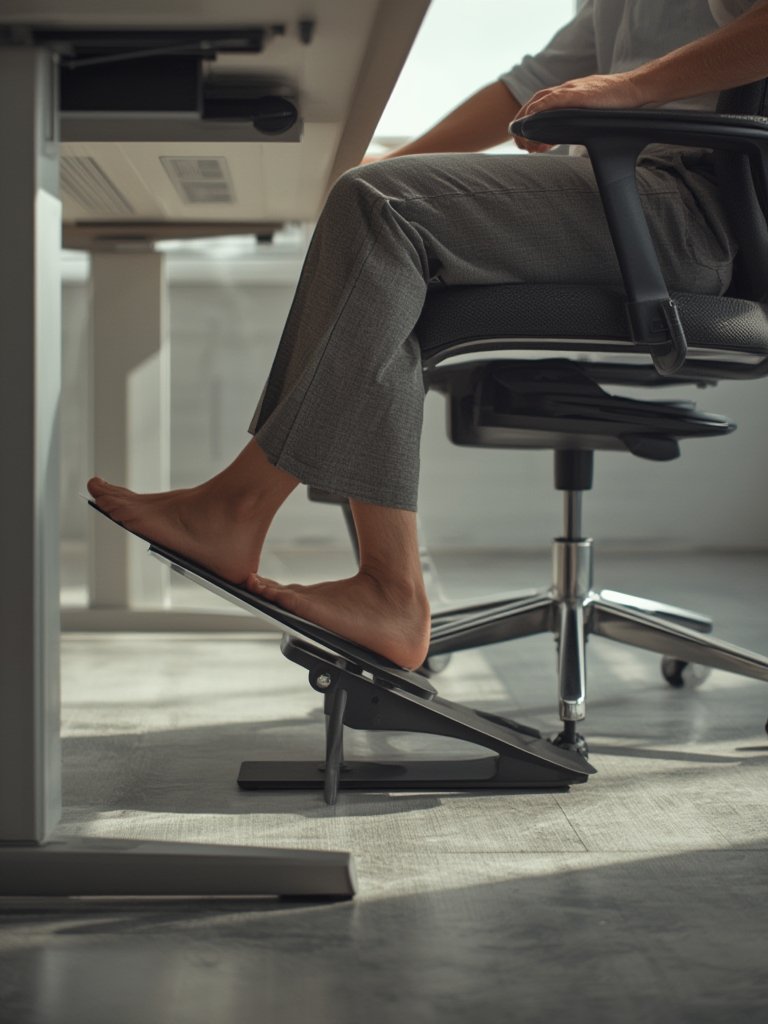
- Target a adjustable height range of 4–6 inches at the back (tapered front), or roughly the distance from your heel to your knee in relaxed sitting. Dynamic platforms often adjust 10–30 cm or ~4–12 inches (see study).
- Angle: Look for a tilt of 15–30 degrees (up to 45 degrees for some circulation models). Too steep can overflex ankles; too flat reduces benefits.
- Platform size: Minimum of 17–18 inches wide and at least 10–12 inches deep for all-day comfort. Narrower units can “pinch” feet together.
- Test the fit at your desk:
- Feet should be flat and fully supported (not just toes or heels), with knees at about hip height or slightly lower. Full foot contact helps avoid localized pressure and supports dynamic movement.
- Watch for pressure at the back of the knees—there should be “space” behind the knee, not pressure from either the seat or footrest edge (to minimize interruption to leg circulation).
- Try the “backrest test” from PubMed ID: 34450458: Sit back. If the footrest encourages you to use the chair’s back for more than 10–15 minutes before slumping or perching, the fit is working.
- Evaluate adjustability and stability:
- Test the angle lock, adjusters, and rocking smoothness. Can it be locked in position—but also switched quickly for another user?
- Make sure the footrest has a non-slip base for use on carpet and hard floors—and check the load rating if you plan to lean heavily or share with larger users.
- Integrate movement:
- Use a rocking or “circulation improving footrest” for dynamic support. Alternate foot position, rock gently, or switch every 30–60 minutes to mimic standing breaks. Movement is key for anti-fatigue effects (more info).
- For shared workstations
- Prioritize wide angle/height adjustability, metal base for durability, and easy-cleanable materials. Modular, tool-free adjusters make quick swaps between users painless.
If you want to level up your whole workspace, pair your new footrest setup with science-backed posture tracking wearables or a smart standing desk for all-day movement breaks.
Advanced analysis & common pitfalls (and how to avoid them)
Not all “ergonomic foot support” products deliver real comfort or benefits. Technical differences between adjustable foot platforms and fixed under-desk footstools matter, and marketplace reviews reveal repeating pain points. Here’s what the evidence (and actual user feedback) tells us.
Comparison table: Adjustable vs Fixed Footrests
| Feature | Adjustable Foot Platform | Fixed Desk Footrest |
|---|---|---|
| Anthropometric Fit | Adapts to different heights/leg lengths, chairs, and shoes. (Best for shared use and non-standard statures.) | Works only if fixed size/angle matches user; often too high/low for many adults. |
| Circulation Benefit | Dynamic (rocking/tipping) action supports active movement, improves venous return and leg fatigue. (Supported by vascular studies.) | Mainly static comfort—limited effect unless user consciously moves feet. |
| Durability | Metal/plastic hybrids: Best long-term reliability for frequent adjustment. Can cost more. | Fewer moving parts, but cheap plastic or foam can crack or flatten quickly. |
| User Complaints | Stiff or loose adjusters; sometimes sliding on floors; complex cleaning if textured surfaces. | Plastic cracking, foam compressing, units too narrow/shallow; “no difference” claims in circulation. |
| Best Use Case | Teams, home office with more than one user, anyone with circulation risk, pregnancy, or frequent footwear changes. | Single-user, static setup where geometry fits; budget solution for healthy adults. |
Common marketplace red flags (what to watch for in reviews)
- Brittle or cracking plastic: Cheap units can snap under moderate load—look for solid metal frames or user-tested engineering plastics.
- Slipping units: Footrests that move or slide on hard floors are a hazard. Always verify non-slip base or rubberized feet.
- Too small or shallow: Check platform dimensions carefully—narrow units force your feet together and shallow ones support only the toes.
- Poor adjustability: Angle or height locks that are stiff, weak, or won’t stay put. For adjustable models, review user feedback on this specific feature.
- Foam bottoming out: Cheaper memory foam can quickly compress, losing both support and posture benefits. Look for compression set testing or at least dense, resilient foam.
- Hard to clean: Fabric covers attract dust/shoe dirt and removable covers may shrink. Textured rollers trap debris. If hygiene matters, prioritize fully wipeable designs.
- Exaggerated “circulation” claims: Be skeptical of bold promises, especially on products with no movement or user instructions. True circulation benefit comes from dynamic, not static, support.
Buyer prompt—questions to ask the seller:
- What is the platform width and depth (in inches or cm)?
- What is the load rating, and is it independently tested?
- Is the angle/height easily user-adjustable and lockable?
- Is the cover removable and washable, and does it retain fit after washing?
- Are there user or occupational health endorsements or lab performance tests published?
Material breakdown — Pros/Cons
- Memory foam: Great barefoot comfort, but compresses and traps dirt; best with washable covers and for single-user setups.
- Plastic/Hybrid: Easy cleaning, but avoid thin low-grade plastic; “massage roller” styles boost stimulation but can be tough to clean.
- Metal platform: Longest durability, supports heavy/shared use; suits adjustable/dynamic circulation improving footrests.

For science behind anti-fatigue workplace setups and movement breaks, see our Smart Standing Desk productivity guide and Ultimate Ergonomic Desk Setup Guide.
Conclusion: What works (and how to buy smart)
The market is crowded, but picking the best desk footrest is simple if you use a scientific and practical checklist. Research favors dynamic/adjustable platforms that fit your unique body, encourage movement, and can withstand routine office abuse—while static foam wedges are fine for casual, single-user setups. Always check real specs, not just marketing language.
Ready to improve your posture and circulation? Audit your workspace, test your ideal footrest height/angle, and choose a desk footrest that adapts to you—not the other way around. Your legs (and back) will thank you.
Want to upgrade your setup further? See our guides to posture tracking wearables and ergonomic desk setup.
FAQ: Desk Footrest — what most people get wrong
How tall should a desk footrest be?
Most users do best with a height of 4–6 inches at the back, tilted 15–30 degrees. Taller footrests may be needed for shorter users or higher chairs. Always test first—stack books under your feet to simulate the height before buying.
What’s more important: angle or height adjustment?
Both matter, but angle is crucial for blood flow and long-term comfort. Look for at least 15–30 degrees of tilt, with adjustable height to fine-tune knee/hip angle so knees stay at or slightly below hip level.
Is memory foam or metal better for footrests?
Memory foam is great for barefoot comfort, but it can compress over time and is harder to clean. Metal or hybrid foot platforms offer better long-term durability and are ideal for adjustable, circulation-improving models—especially in shared offices.
Will any footrest improve my leg circulation?
No. Only dynamic or angled footrests that prompt intermittent ankle movement (rocking, tilting) have measurable effects. Static platforms mainly reduce pressure; real anti-fatigue benefit comes from movement, not just resting your feet.
What’s the biggest mistake buyers make?
Assuming all footrests are “one size fits all.” Undersized or non-adjustable units are the top complaint, along with poor durability and slipping. Always check specs, and read real user reviews focused on your body size and use case.
—