

Standing Desk Converter setups are now the number one way for budget-focused remote workers to transform any desk into an ergonomic sit-stand workstation—without buying a new desk or busting your budget.
Key Takeaways
- Standing desk converters are the smartest way to retrofit any existing desk for standing use, saving hundreds versus a full replacement.
- Choosing the right converter means focusing on stability, space compatibility, and ergonomic features that really matter for your health.
- Most negative complaints revolve around wobble, hard assembly, and poor adjustment—avoid these pitfalls with a careful checklist and in-store/review testing.
- Why pick a Standing Desk Converter instead of a new desk?
- 2024 market snapshot — who’s buying and why it matters to budget shoppers
- What budget-conscious buyers actually prioritize
- Top real-world complaints and how to avoid them when choosing a desktop riser
- Must-have technical specs for retrofit compatibility (practical checklist)
- Price guide and tradeoffs — what you can expect in 2024
- Ergonomic risks from poor use and features that reduce harm
- How to test a converter before buying (in-store or from reviews)
- Top 3 sub-topics competitors often skip (opportunities to own search)
- 2024 innovations and certifications to watch (and what they mean for buyers)
- Final buying checklist (TL;DR action items) + next steps
- FAQ
Why pick a Standing Desk Converter instead of a new desk?
If you want the health benefits of standing without spending a fortune or overhauling your workspace, a Standing Desk Converter makes the most sense. With prices for desktop converters and risers typically between USD 200 and 600 as of 2024, retrofitting is simply the most accessible solution for cost-sensitive buyers.[source] Unlike getting a brand new standing desk (manual crank or electric), a converter lets you keep your current workflow and furniture, minimize disruption, and skip the junking or resale headache. The main tradeoff is that desktop risers usually offer less maximum stability and sometimes fewer high-end features than premium electric desks. Still, for most users, a retrofit standing desk delivers enough flexibility and performance for daily health and work needs.
2024 market snapshot — who’s buying and why it matters to budget shoppers
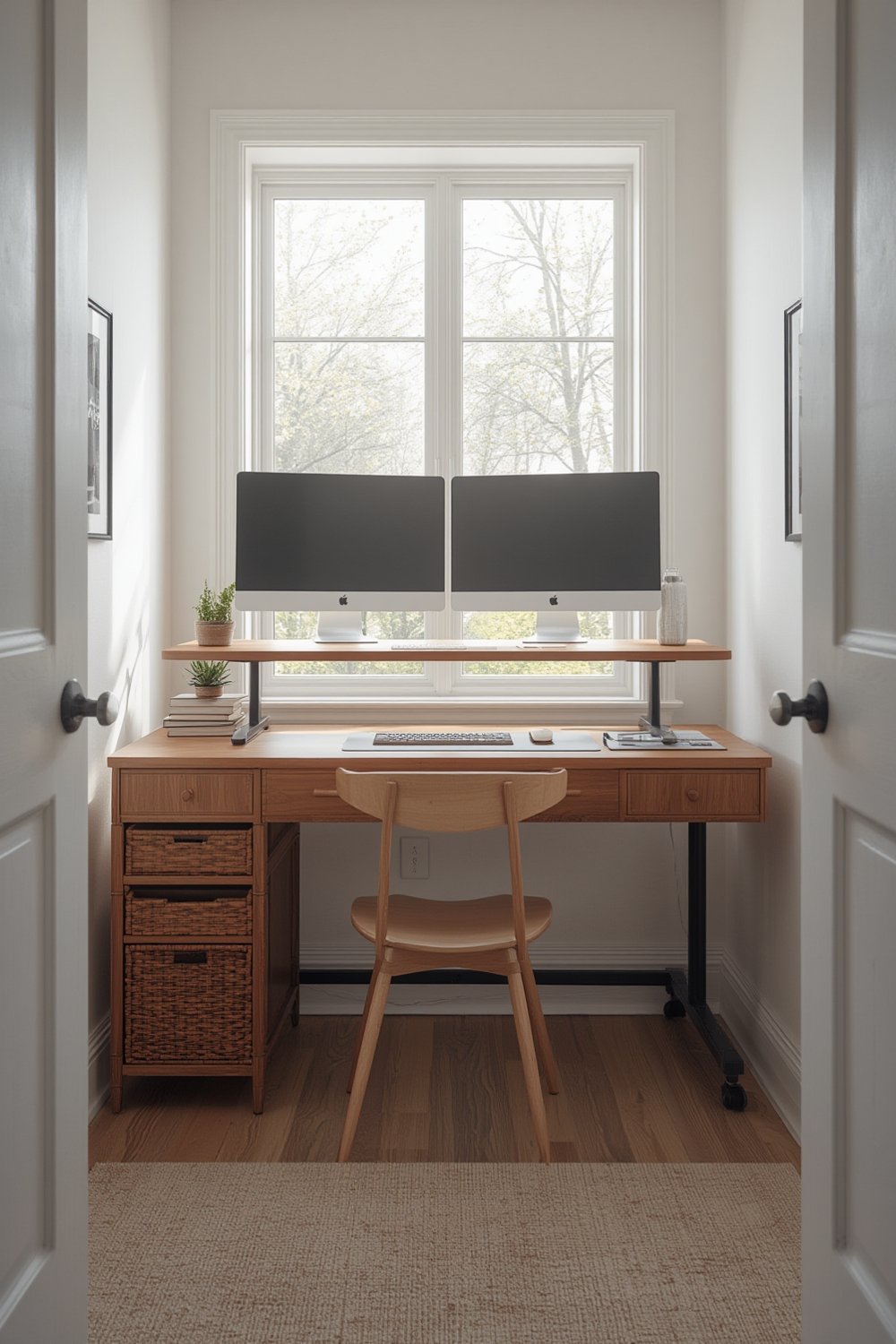
The standing desk converter market hit USD 1.48 billion globally in 2024, and it’s growing at over 7% per year. Manual and spring-assisted desktop converters account for more than 65% of sales, a clear sign that most buyers want affordability and simplicity over premium electric features.[source] Hybrid work demand and concern over sedentary health drive adoption. But high-end electric risers remain too expensive for many, keeping value-conscious shoppers in the basic tiers. Cost, limited home desk space, and a desire for minimum-disruption upgrades are the top market forces shaping what brands release and what features you get for your money.
What budget-conscious buyers actually prioritize
It’s not about bells and whistles. Most shoppers in the desktop converter market care about:
- Stability (wobble-free typing and mousing is a must)
- Straightforward adjustment (manual or spring-assisted over complex electronics)
- Small, smart footprint (limited desktop space, no overhang nightmares)
- Sustainable materials (bamboo, recycled content, etc.)
Eco-friendly priorities are rising too: in 2024 over 45% of buyers preferred sustainable materials, and 38% of converters used modular, upgradable designs.[source] Nearly 30% of new models included “smart” features, but for the typical value-first user, these extras rarely justify a much higher sticker price. The sweet spot? A Desktop Riser Adjustable for one or two screens, compact and fuss-free—sometimes called a sit-stand desk topper—offering just enough ergonomic flexibility for real work, not just video calls.
Top real-world complaints and how to avoid them when choosing a desktop riser
No product is perfect—but knowing common risks makes you much less likely to waste money or get frustrated. The evidence from negative reviews and market research shows three problems dominate:
- Wobble and instability: Poor weight distribution or a too-narrow base can make the desktop bounce with every keystroke. Watch for wide, reinforced bases and crossbars.
- Difficult assembly or confusing instructions: Many users dislike lengthy, tool-heavy setups. Simpler manual/spring mechanisms rank as much easier to assemble than electric units with wiring.
- Limited height or Keyboard tray ergonomics adjustment range: If your converter doesn’t raise high enough (or dips too low for sitting), or if the keyboard tray is fixed, you could end up swapping one ergonomic pain for another.
Red flags: check reviews for “wobble,” “flimsy,” hard to put together, or “keyboard too low.” Focus on Desktop Riser Adjustable units with clear, honest spec sheets and return-friendly policies. For more troubleshooting tips, see our Ultimate Ergonomic Desk Setup Guide.
Must-have technical specs for retrofit compatibility (practical checklist)
Don’t get burned by an ill-fitting converter. Here’s what the market and professionals agree really matters for a height adjustable platform:
- Weight/load capacity: Enough for 1–2 monitors, laptop, keyboard, and mouse (check manufacturer claims, but be wary if it’s under 25 lb/11 kg for standard setups).
- Height adjustment range: Can you go low enough to sit comfortably, and high enough to stand upright without hunching? Most adults need at least 16–20″ vertical movement.
- Base/footprint size: Will it fit on your desk? Avoid models that overhang or require more depth than your desk allows.
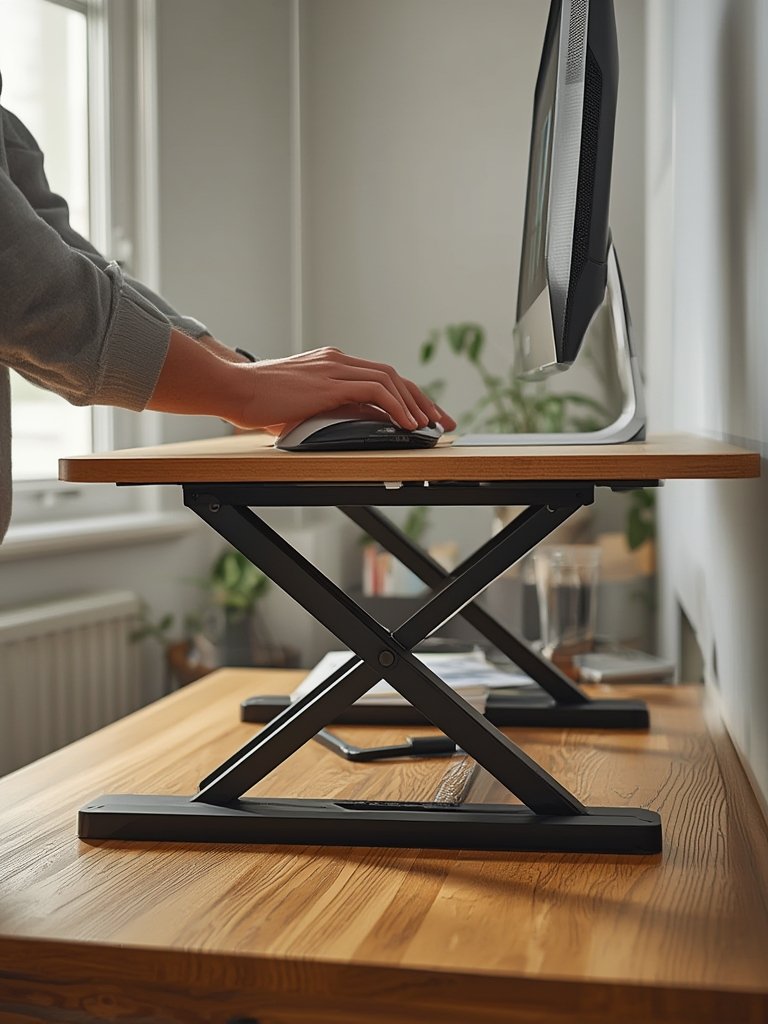
- Stability design: Wide bases and stability crossbars reduce wobble—pay attention to these features.
- Keyboard tray ergonomics: An adjustable or removable tray allows neutral wrists at both sitting and standing heights.
Measure your own desk’s depth and width, factoring in space behind the existing monitor. For more setup details, review our step-by-step ergonomic desk setup guide.
Price guide and tradeoffs — what you can expect in 2024
| Product Type | 2024 Typical Price Range | Common Features |
|---|---|---|
| Standing Desk Converter/Desktop Riser | USD 200–600 | Manual/spring mechanisms, basic adjustability, stability focus |
| Manual Crank Desk | USD 300–800 | Whole-desk conversion, more space, but pricier and bulkier |
| Single-Motor Electric Desk | USD 600–1,200 | Electric lift, memory presets, bigger height range |
| Dual-Motor Electric Desk | USD 800–2,000 | Best for multiple monitors, advanced stability |
| Premium Electric Desk | Above USD 2,500 | App controls, anti-collision sensors, heavy-duty build |
The budget standing solution for most homes is a converter in the USD 200–600 band. Expect spring-assisted or manual mechanisms, practical adjustability, and decent stability—skip the motor or smart controls and you’ll save hundreds.[source] For extra tech and full-desk size, the price ramps up fast. Choose the height adjustable platform that matches your real workstation needs, not the marketing hype.
Ergonomic risks from poor use and features that reduce harm
Standing desk adoption is linked to reduced back pain and better posture,[source] but only when users actually set up their gear well and alternate between sitting and standing. Common risks:
- Back pain or foot discomfort from standing too long at a bad height
- Postural strain if monitor and keyboard are misaligned (fixed keyboard trays can worsen this)
- Transition “burnout” if adjustment is fiddly or slow—making you stop shifting positions altogether
Look for features that help: programmable memory and digital height controls (if electric), anti-collision sensors (for safety), stable crossbars, and especially keyboard trays with true ergonomic adjustment. For extra tips, read how posture tracking wearables support standing routines.
How to test a converter before buying (in-store or from reviews)
If you can get hands-on time, try these reliable tests—if not, look for video reviews or specification confirmations:
- Wobble test: With monitors and a bit of weight, tap and type normally. Minimal wobble, especially at max height, is a must.
- Full height reach: Can the riser go high enough for your elbows and eyes to be at comfortable ergonomic height?
- Keyboard/mouse tray test: Are your wrists straight and level, or bent awkwardly? Removable or angle-adjust trays are a bonus.
- Assembly check: Ask “Can I do this alone, in under 1 hour, with basic tools?”
- Desk fit measurement: Measure your desk’s useable depth and width—make sure listed converter specs fit within it, with room for cables and accessories.
If product specs are absent (or images look misleading), that’s a red flag. Simpler manual and spring-loaded designs typically rank higher for practical adoption, as confirmed by a majority of value-focused buyers in 2024 research.[source]
Top 3 sub-topics competitors often skip (opportunities to own search)
1. True market segmentation for budget buyers
The real-world split between manual/spring and electric converters shapes price, ease of assembly, and failure risks. With 65.5% of 2025’s global market in the manual/spring category, a budget standing solution almost always means skipping motors for fewer headaches and far less cost.[source]
2. Quantified trade-offs between stability, load capacity, and ergonomics
More features, more risk: high load limits (for dual monitors) demand better crossbar design and a wider base, while precision adjustment and memory controls only matter if the basic stability is already excellent. Many “feature-rich” units cut corners where it counts most. Always compare real load capacity versus stated specs—don’t overload thin, bargain platforms.
3. Desk depth and space constraints—why not all converters will fit
Some “best” models simply won’t work on desks under 24″ depth or with desktop cutouts. Always compare unit dimensions to your actual desk, cable management, and how far the arms/trays project toward the user. Desktop Riser Adjustable units with a compact footprint are crucial in small home offices—see more in our ultimate setup walkthrough.

2024 innovations and certifications to watch (and what they mean for buyers)
Thirty percent of standing desk converters released in 2024 included digital height controls and memory presets, and about 25% now sync with apps.[source] Nearly 38% use modular, upgradable designs, and 45% of buyers prefer eco-friendly materials like bamboo or recycled content. Anti-collision sensors and stability crossbars are also on the rise, especially in higher-end models. However, there are no new industry certifications specific to standing desk converters this year, so buyers should lean on detailed spec sheets, honest user reviews, and reliable warranty policies. For more on the future of digital posture and wearables, check out our Smart Standing Desk Guide.
Final buying checklist (TL;DR action items) + next steps
Before you buy, run through this quick checklist:
- Decide your budget band: USD 200–600 covers most reliable converters.
- Measure required load capacity: For 1–2 monitors plus keyboard/mouse (at least 25 lb recommended).
- Confirm height range: Supports sitting and standing comfortably for your height.
- Check desk depth and width: Converter must fit without risky overhang (measure desktop space with gear already in place).
- Assess assembly tolerance: Can you assemble alone, quickly?
- Review warranty and return policies: Go for at least 1 year coverage and easy returns.
- Scan reviews for red flags: Wobble, hard assembly, poor adjustability.
Ready to level up? Shortlist 2–3 retrofit standing desk models, check them off against these specs, and, if possible, test for stability and fit—prioritize stability and compatibility over optional smart features, especially for budget buyers. See our full ergonomic desk setup tutorial and read about back-friendly posture tech to stay comfortable all day.
FAQ
What is a standing desk converter and how does it differ from a full standing desk?
A standing desk converter (also called a desktop riser or sit-stand desk topper) sits on top of your existing desk and raises your monitor, keyboard, and mouse, so you can work sitting or standing. A full standing desk replaces your entire desk and often costs much more.
Do converters work on small or narrow desks?
Yes, but check the converter’s base footprint. Many models require at least 24″ desk depth for stability. Always measure your own desktop and compare against the converter’s specs.
Are manual or electric converters better?
Manual and spring-assisted converters dominate for budget buyers (over 65% market share as of 2025) because they’re simpler, cheaper, and easier to assemble. Electric models offer more presets but can be overkill for most home offices.
How can I prevent wobble or instability?
Pick a converter with a wide, stable base and, ideally, a crossbar for reinforcement. Avoid exceeding the recommended weight limit, and make sure your desk surface is level and solid.
What features are truly worth paying for?
For most, it’s all about rock-solid stability, enough adjustable range for standing and sitting, and good ergonomic keyboard tray position. Smart controls and app integration are mostly premium extras.